
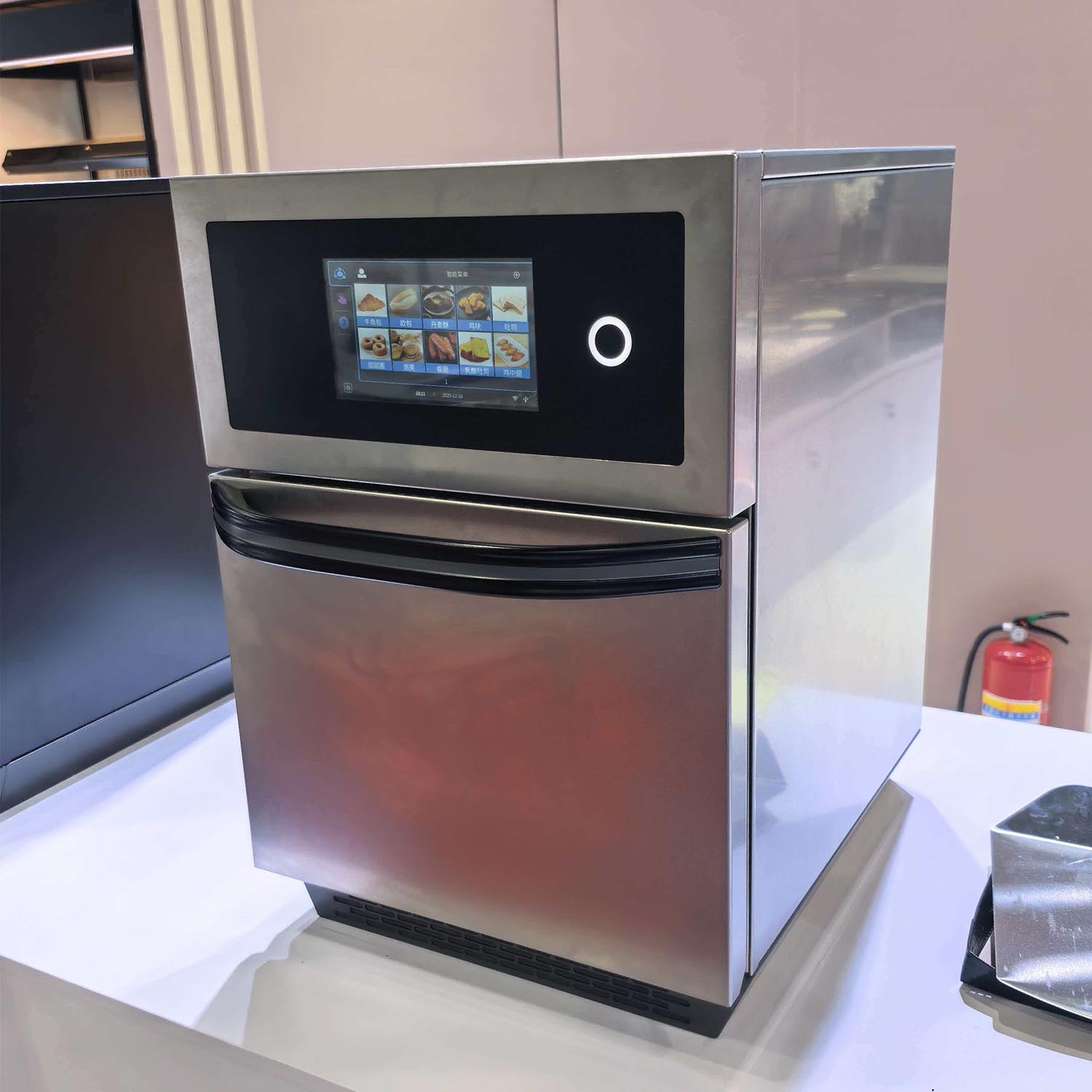
The high speed oven is a high-end kitchen appliance that integrates multiple advanced cooking technologies, including microwave heating, hot air convection, top and bottom broiling, and even steam assistance. It is specifically designed for modern households and professional kitchens seeking efficiency, health, and delicious results. Unlike traditional ovens requiring lengthy preheating periods and extended cooking cycles, high speed ovens rapidly heat ingredients from within using microwaves. Simultaneously, high-speed circulating hot air ensures even heating, while infrared broiling creates an enticing, crispy crust. This enables the completion of visually appealing, aromatic, and flavorful dishes in remarkably short timeframes. For instance, a steak can achieve the perfect doneness with a crispy surface in just 8–10 minutes, while a pizza can be baked to professional-grade results in under 5 minutes. Most high speed ovens feature intelligent control systems with dozens of preset menus. Users simply select ingredient type or recipe name, and the device automatically matches the optimal heating mode, temperature, and time—ensuring effortless operation and consistent results. Their compact built-in or countertop designs save space, accommodating any kitchen layout. Interiors typically use easy-clean materials, with premium models offering steam self-cleaning or one-touch cleaning functions for minimal maintenance. In terms of energy efficiency and environmental friendliness, high speed ovens consume less electricity than traditional models due to their high heating efficiency and short preheating times. Whether for busy professionals seeking quick, nutritious dinners, baking enthusiasts pursuing professional-grade results, or small eateries requiring efficient meal service, high speed ovens deliver reliable support. With the advancement of smart home technology, newer models also support remote control via mobile apps and integration with voice assistants, further enhancing the user experience. In summary, high speed ovens not only redefine the relationship between speed and quality but have also become essential tools in modern kitchens, seamlessly integrating technology, efficiency, and lifestyle aesthetics.
What are the functions of a high speed oven?
The high speed oven integrates multiple heating technologies, delivering powerful and efficient performance. Its core functions include: Hot air convection, which circulates heated air at high speeds for even baking, ideal for cakes, bread, and other baked goods; top and bottom heating (infrared heating), creating crispy, caramelized surfaces perfect for roasted chicken, steak, pizza, and more; select premium models also feature steam assistance, injecting steam during baking to keep ingredients tender and juicy. Additionally, rapid ovens typically incorporate smart menus like defrost, reheat, proofing, slow roasting, and air frying. Users simply select ingredient type or recipe, and the appliance automatically sets optimal temperature and time. Supports rapid preheating (1–3 minutes), saving energy and time compared to traditional ovens. Most models offer precise temperature control (within ±5°C) and multi-stage cooking programs, allowing sequential switching between heating modes. The user interface is straightforward, often featuring touchscreens, knobs, or mobile app remote control. Some models also support voice assistant integration.
What foods can be baked in a high speed oven?
The high speed oven combines multiple heating methods—microwave, hot air convection, and broiling—making it suitable for a wide range of ingredients and covering nearly all daily cooking needs. It excels at roasting meats like steak, chicken wings, and lamb chops, achieving a crisp exterior and tender interior in minimal time. Baked goods such as cakes, bread, cookies, and tarts receive even heat distribution for optimal rise. Western dishes like pizza, baked rice, and lasagna can be quickly reheated or freshly baked to preserve their crispy texture. Vegetables like roasted pumpkin, bell peppers, and eggplant lock in moisture while developing a savory char. It also excels at preparing seafood like fish, shrimp, and shellfish, preventing overcooking that leads to dryness. Additionally, the rapid oven supports air frying (on select models), enabling low-oil preparation of healthier versions of fried foods like french fries and chicken nuggets. It also handles auxiliary tasks such as defrosting, proofing dough, and drying fruit. For Chinese dishes like char siu pork, Peking duck, and scallion oil chicken, it delivers efficient results. Thanks to smart menus and multi-stage programs, users simply select the corresponding mode to effortlessly achieve professional-grade flavors. In short, whether it’s breakfast, main meals, desserts, or snacks, the rapid oven efficiently meets diverse culinary needs with high-quality results.
Are high speed ovens harmful to human health?
Under normal operating conditions, high speed ovens pose no harm to human health. They typically combine multiple heating methods such as microwaves, hot air convection, and broiling. The microwave component operates at the same safe frequency band as household microwave ovens (generally 2.45GHz). As long as the appliance complies with national electrical safety standards and the door seal remains intact with no leakage, microwave radiation stays within safe limits and does not cause harm to the human body. Modern rapid cook ovens incorporate multiple safety protections, such as automatic power-off when the door is opened, overheat protection, and child locks, further ensuring safe operation. Moreover, microwave heating itself does not make food “radioactive” or produce harmful substances. Instead, its short heating time helps preserve more nutrients. It is important to avoid using metal containers or non-microwave-safe plastic utensils to prevent fires or the release of harmful chemicals. Regular cleaning and maintenance of the appliance, along with ensuring the door seal remains intact, can also effectively mitigate potential risks. Overall, when operated according to the manual, microwave ovens are safe, efficient, and healthy kitchen appliances that pose no threat to human health.
What are the advantages of a high speed oven compared to a conventional oven?
High speed ovens offer significant advantages over traditional ovens. First, they heat up faster: combining microwave, hot air convection, and broiling functions, they can complete preheating and cooking in minutes, saving 30%–70% of the time compared to conventional ovens. Second, they offer more versatile functions: beyond baking and broiling, they can defrost, proof dough, air fry, and even steam cook—serving as a multi-purpose appliance that replaces both a microwave and conventional oven. Third, they are more energy-efficient: with shorter operating times and higher thermal efficiency, they consume less electricity overall, making them more eco-friendly. Fourth, superior cooking results: Microwaves heat from within to lock in moisture, while hot air ensures even heating. Grilling creates a crispy exterior, achieving that professional “crispy outside, tender inside” texture. Fifth, smarter operation: Most models feature preset menus, touchscreens, and smartphone app control, simplifying the process for beginners. Finally, more compact size: Typically countertop or small built-in designs save kitchen space, making them ideal for small apartments or modern open-concept kitchens. In summary, rapid cook ovens surpass traditional ovens in efficiency, functionality, energy savings, and user experience, making them the perfect upgrade for modern kitchens.
What foods can a high speed oven cook?
The high speed oven combines the advantages of multiple heating technologies—including hot air convection, microwave, broiling, and even steam—to efficiently and evenly cook a wide variety of foods. It excels at preparing meat dishes like Orleans-style wings, honey-glazed chicken thighs, steaks, lamb skewers, and whole roasted fish. High-temperature rapid baking quickly seals in juices, creating a crispy, caramelized exterior while keeping the interior tender and succulent. It also effortlessly handles vegetables such as roasted eggplant, bell peppers, broccoli, mushrooms, and tofu cubes, quickly bringing out their natural aromas and enhancing flavors when paired with sauces. For main dishes, the rapid oven excels at preparing pizza, roasted sweet potatoes, corn on the cob, potato wedges, or baked rice with cheese, heating quickly while matching the texture of traditional methods. Furthermore, it handles most home baking needs, including egg tarts, cookies, cupcakes, mochi, puddings, and even black sesame crispy treats. While it may have slight limitations for temperature-sensitive delicate pastries like chiffon cakes, it’s more than sufficient for everyday baking. Nuts like peanuts, walnuts, and chestnuts can be roasted using the low-temperature setting, preserving nutrients while adding a crispy, nutty flavor. In short, the rapid cook oven can handle almost anything. It caters to working professionals seeking quick meals while accommodating diverse tastes for family gatherings or baking enthusiasts. Simply select the appropriate heating mode, temperature, and time based on ingredient characteristics to effortlessly create delicious dishes. This makes it an ideal tool for boosting efficiency and quality in modern kitchens.
How many preset menus can the high speed oven accommodate?
The number of menu settings in a high speed oven varies by brand, model, and feature positioning, typically ranging from 10 to 50 preset menus. Entry-level home models generally include 10 to 20 common recipes such as chicken wings, pizza, french fries, egg tarts, and steak, offering simple operation ideal for daily quick cooking needs. Mid-to-high-end models offer 30 to 50 or more intelligent menus, covering diverse scenarios like Chinese and Western dishes, baking, defrosting, and reheating, while also supporting user-defined custom cooking programs. Certain commercial or flagship high speed ovens also feature connectivity, enabling users to download cloud-based recipes via apps for one-touch cooking of hundreds of dishes. These preset menus typically optimize parameters like temperature, time, and heating modes (e.g., microwave + convection combinations). Users simply select the corresponding option and place ingredients inside for automatic operation, significantly lowering the learning curve. Additionally, some models allow users to adjust preset parameters and save them as new menus, enabling flexible customization. Overall, the number of menus in a rapid cook oven not only reflects its level of intelligence but also directly impacts ease of use and cooking versatility. When selecting a model, choose the appropriate configuration based on your dietary habits and cooking frequency.
What material is the high speed oven made of?
The primary materials of a high speed oven balance high-temperature resistance, safety, and aesthetics in both structure and function. Its outer shell typically employs premium cold-rolled steel plates with a spray-coated or brushed stainless steel finish, ensuring both durability and easy cleaning. Some high-end models utilize all-stainless steel construction to enhance texture and corrosion resistance. The interior cavity is the core component, commonly constructed from enamel-coated steel or stainless steel: enamel linings offer a smooth, dense surface resistant to high temperatures and grease, facilitating easy wiping; stainless steel linings provide greater strength and scratch resistance without the risk of coating peeling, making them ideal for long-term, high-frequency use. Doors typically feature double- or triple-layered heat-resistant glass with an air gap or insulating film in between. This design effectively blocks heat loss while maintaining excellent visibility for monitoring cooking progress. Heating elements include metal or ceramic heating tubes for convection systems, copper and ferrite materials for microwave generators (magnetrons), and quartz tubes or infrared heating tubes for grilling functions. Internal racks and grills are typically made of chrome-plated steel wire or stainless steel for high-temperature resistance and strong load-bearing capacity. All materials in contact with food or exposed to heat undergo national food safety and electrical safety certifications to ensure no harmful substances are released at high temperatures. Overall, rapid cook oven material selection prioritizes safety, durability, and thermal efficiency, meeting the high standards demanded of modern kitchen appliances.
Energy Consumption Issues of High Speed Ovens
The energy consumption of high speed ovens is typically lower than or comparable to traditional ovens, offering higher overall energy efficiency. Their core advantages lie in rapid heating, short preheating times (generally 1–3 minutes versus 10–15 minutes for conventional ovens), and reduced cooking times by 30%–70%, significantly lowering electricity usage. For example, a rapid oven operating at 2000–2800W for 10 minutes consumes approximately 0.33–0.47 kWh of electricity. In contrast, a traditional oven running at 2000W for 30 minutes consumes about 1 kWh. Although rapid ovens have higher instantaneous power consumption, their significantly reduced total operating time results in lower overall electricity usage. Furthermore, their intelligent coordination of multiple heating modes (such as microwave + convection combinations) is more efficient than single-source heating, minimizing energy waste. Most new models meet national Class 1 or Class 2 energy efficiency standards and incorporate energy-saving features like auto-shutdown and residual heat utilization. Of course, frequent use of high-power broiling or extended baking cycles will increase consumption. However, overall, when completing the same cooking tasks, rapid cook ovens achieve significantly lower energy consumption per dish due to their high efficiency and shorter cycle times. Therefore, for households or small commercial settings seeking both efficiency and energy savings, rapid cook ovens represent a relatively low-energy, cost-effective choice.
What are the application scenarios for a rapid cook oven?
The rapid cook oven excels in efficiency, versatility, and space-saving design, making it suitable for diverse residential and commercial settings. In modern home kitchens, it particularly benefits busy professionals, young families, or novice cooks by swiftly preparing nutritionally balanced meals—such as breakfast toast with fried eggs or dinner chicken legs with roasted vegetables. For baking enthusiasts, its precise temperature control delivers professional-grade results for cakes, bread, cookies, and more. In compact or open-concept kitchens, its compact design replaces the microwave-plus-oven combo, freeing up counter space. In light catering settings like cafes, quick-service restaurants, office break rooms, or B&B kitchens, the rapid cook oven efficiently prepares pizzas, sandwiches, baked rice dishes, and other menu items, accelerating service speed. Students in dorms or renters (where permitted) can also use it to replace traditional stovetops for safe, convenient food heating and baking. Additionally, in health-conscious cooking scenarios, users can leverage its low-oil air frying and precise temperature control to prepare low-fat meals and sugar-free desserts. In summary, the rapid cook oven combines speed with quality, making it an ideal kitchen appliance for daily home use, small commercial settings, and those pursuing an efficient lifestyle.
What precautions should be taken when using a high speed oven?
When using a high speed oven, observe the following precautions to ensure safety, optimal results, and appliance longevity: First, always read the instruction manual to understand the appropriate scenarios and operating methods for each function mode (such as microwave + broil combination) to avoid misuse. Second, select appropriate cookware: Metal containers, gold-rimmed ceramics, or aluminum foil are prohibited in microwave mode (unless permitted by specific settings). Use glass, ceramic, or heat-resistant plastic marked “microwave safe.” Metal baking pans may be used in broil or convection modes, but verify compatibility with the current program. Third, avoid running the microwave function empty to prevent magnetron damage. Fourth, ensure adequate ventilation and heat dissipation by maintaining sufficient clearance around the oven (typically 10cm or more). Do not cover the top or block ventilation openings. Fifth, regularly clean the interior cavity, door seal, and turntable to prevent grease buildup that may reduce heating efficiency or cause odors. Sixth, close the door before starting the oven and check for proper door seal to prevent microwave leakage or heat loss. Seventh, supervise children during use, as hot surfaces and steam may cause burns. Finally, immediately disconnect power and contact customer service if you notice unusual noises, smoke, odors, or uneven heating. Proper use and maintenance maximize the rapid oven’s efficiency, safety, and versatility.
How to Choose the Right Rapid Cook Oven?
Selecting the right rapid cook oven requires considering functionality, capacity, brand, safety, and usage habits. First, define your needs: If primarily used for reheating and simple baking, a basic model suffices. For frequent steak, pizza, or professional baking, opt for a high-end model featuring multi-function modes like microwave + convection + broil + steam (if available). Second, consider capacity: For 1–2 people, a 20–25L model suffices. For households of 3 or more, opt for 25–30L or larger to accommodate a whole chicken or standard baking sheet. Third, examine core specifications: A high-quality interior (e.g., stainless steel or enamel), precise temperature control (within ±5°C), and true power ratings (typically 800–1200W for microwave, 1000–1800W for broiler) guarantee performance. Fourth, prioritize user-friendly operation: Opt for models with smart menus, touchscreens, preset programs, and app control for enhanced usability. Fifth, verify safety certifications: Confirm the product holds relevant international certifications (e.g., CE) and includes safety features like door lock protection and overheat shut-off. Sixth, Brand and After-Sales Service: Prioritize reputable brands like Midea, Panasonic, Toshiba, Bosch, and Miele to ensure quality and reliable maintenance support. Finally, Allow Installation Space: Countertop models require sufficient counter space and ventilation clearance, while built-in models necessitate cabinet size verification. By balancing budget and practical needs, you can rationally select an efficient, durable, and user-friendly rapid cook oven.
The Difference Between a high Speed Oven and a Microwave Oven?
High speed ovens and microwave ovens differ significantly in principle, functionality, and cooking results. Heating principles vary: Microwave ovens rely solely on microwaves to agitate food molecules internally for heat generation, offering rapid heating but lacking browning or crisping capabilities. High speed ovens, however, integrate multiple technologies—microwaves, hot air convection, top/bottom heating (and even steam)—enabling swift heating while achieving baking, caramelization, and puffing effects. Functional disparities are pronounced: Microwave ovens primarily handle defrosting, reheating, and simple cooking, struggling with baking or roasting tasks. Rapid ovens, however, can prepare complex dishes like cakes, pizza, steak, and roast chicken, functioning closer to professional ovens. Culinary outcomes diverge sharply: Microwave heating often results in soggy, flavorless food; while high speed ovens retain moisture while forming a golden, crispy crust for superior texture. Energy consumption and efficiency: Though both are efficient, high speed ovens save time and energy compared to traditional ovens when achieving high-quality results due to their combined heating. Microwaves remain suitable only for basic reheating. Size and Price: Speed ovens are typically larger and more expensive (often 2–5 times the price of a microwave), but their multi-functionality replaces both a microwave and a conventional oven. Additionally, they have different cookware restrictions—microwaves prohibit metal, while speed ovens can safely use metal baking pans in non-microwave modes. In summary, if heating alone is the goal, a microwave suffices. For those seeking flavorful results and versatility, a high speed oven offers a more comprehensive kitchen solution.
The Difference Between a High Speed Oven and a convection Oven?
High speed ovens and conventional ovens differ significantly in positioning, technical principles, and application scenarios.
High speed ovens are multifunctional appliances for home or light commercial use, integrating microwave, hot air convection, broiling, and even steam functions. They emphasize speed and versatility. It completes tasks like heating, baking, and roasting within minutes, making it ideal for daily household use. Compact in size with smart operation, it supports one-touch recipes, emphasizing efficiency and convenience.
Convection ovens primarily rely on built-in fans to force-circulate hot air, achieving uniform and efficient baking. They are widely used for high-end home baking or in commercial kitchens. It lacks microwave functionality and requires longer preheating and cooking times than rapid ovens, but offers more stable temperature control and larger capacity (especially commercial models). It excels at batch-producing bread, cakes, roasted meats, and other items, delivering professional-grade texture and consistency.
In short, microwave ovens excel at “speed + versatility,” fitting fast-paced lifestyles; convection ovens excel at “evenness + professionalism,” suited for deep baking or commercial output. If you need both heating and baking, choose a microwave oven; if you focus on high-quality batch baking, a convection oven is more suitable.
How to maintain your High Speed Oven daily?
Regular maintenance of your rapid cook oven not only extends its lifespan but also ensures optimal cooking results and safe operation. Here are key maintenance tips:
Clean the interior promptly: After each use, wait until the oven has cooled to a warm state (not hot to the touch). Wipe the interior walls, bottom, and door glass with a damp cloth or soft sponge. If food residue has dried and hardened, place a bowl of water inside and heat for 2–3 minutes to generate steam that softens the stains, allowing for easy removal. Avoid using steel wool pads or strong acidic/alkaline cleaners, as these can damage the enamel or stainless steel interior.
Regularly clean racks and turntables: Remove racks, baking trays, or microwave turntables. Wash with neutral dish soap, dry thoroughly, then reinsert to prevent rust or lingering odors.
Keep ventilation openings clear: The back or sides of the rapid oven feature heat vents. Regularly clean dust from these areas using a dry cloth or vacuum cleaner to prevent blockages that could hinder heat dissipation, leading to overheating or malfunctions.
Inspect door seals and hinges: Ensure the door closes tightly, with seals free of damage, grease, or deformation. A poorly sealed door may cause heat/microwave leakage, affecting efficiency and safety.
Avoid running microwave function empty: Never activate microwave mode without food inside to prevent magnetron damage.
Power-off maintenance: When not in use for extended periods, unplug the unit and keep the interior dry to prevent moisture buildup.
By following these simple, routine maintenance steps, your microwave oven will consistently operate efficiently, cleanly, and safely.
What is the service life of a rapid cook oven?
The lifespan of a rapid oven (also known as a high-speed oven or convection microwave combination oven) typically ranges from 5 to 10 years, with the exact duration influenced by multiple factors including usage frequency, maintenance practices, product quality, and operating environment. In household settings, with proper operation, timely cleaning, and moderate usage (e.g., several times per week), the lifespan generally reaches 8 to 10 years. However, in commercial environments (such as fast-food restaurants, cafes, or convenience stores) where the appliance operates at high frequency, noticeable performance degradation or critical component failure may occur within 3 to 5 years.
Key factors affecting microwave oven lifespan include: aging heating elements or quartz tubes, fan motor wear, diminished efficiency of the microwave generator (if equipped), electronic control panel malfunctions, and internal wiring deterioration caused by prolonged exposure to high temperatures and humidity. Additionally, failure to promptly remove food residue and grease not only fosters bacterial growth and odors but may also clog vents, impairing heat dissipation and accelerating component damage.
To extend the appliance’s lifespan, users should perform basic cleaning after each use and conduct regular deep cleaning of the interior cavity and exhaust vents. Avoid running the oven empty or overloading it for extended periods. Ensure stable power supply voltage and place the unit in a well-ventilated, dry location. When purchasing, prioritize reputable brands with strong after-sales service, as this significantly enhances both longevity and safety. In summary, scientific usage and meticulous maintenance are essential for ensuring the long-term, efficient operation of your microwave oven.

Product Video:  Follow us on Facebook
Product Category
| >Cooking Equipment | >Refrigeration Equipment | >Bakery Equipment | >Food Processing Equipment | >S.S. Furniture
| >Food Display Equipment | >Snack equipment | > | >Furniture | >Small Wares